FADOA Research TeamMar 30, 20266 min readResearch & Insights
The phrase AIDS orphan can sound narrow, but the day-to-day challenges are usually interconnected. A child may need HIV testing or treatment, help remaining in school, psychosocial support after bereavement, and protection from exploitation or stigma at the same time. That is why many programs work with orphans and vulnerable children together. The practical question is not only who qualifies under a label. It is whether children can reach the services and stability they need to stay safe and keep developing.
Healthcare Challenges Remain Immediate and Uneven
Healthcare is often the most urgent challenge because many AIDS-affected households are already dealing with illness, treatment interruption, transport costs, and weak local service access. UNICEF notes that children and adolescents are still faring worse than adults in the HIV response, and that only 57 percent of children aged 0 to 14 living with HIV were receiving antiretroviral therapy in 2023, compared with 77 percent of adults.[2] When a child loses a parent, those gaps can widen further because the adult who managed clinic visits, medicines, or household decisions may no longer be there.
Caregiver transitions also create risk. Grandparents, older siblings, or extended family members may step in with limited money, little transport, and incomplete information about a child's medical history. CDC describes OVC programming as a response not only to HIV treatment needs, but also to the broader health, safety, and resilience needs of children and adolescents affected by HIV.[3][4] That broader approach matters because missed appointments, untreated illness, poor nutrition, and emotional distress tend to compound each other rather than remain separate problems.
Education Disruption Is One of the Most Lasting Setbacks
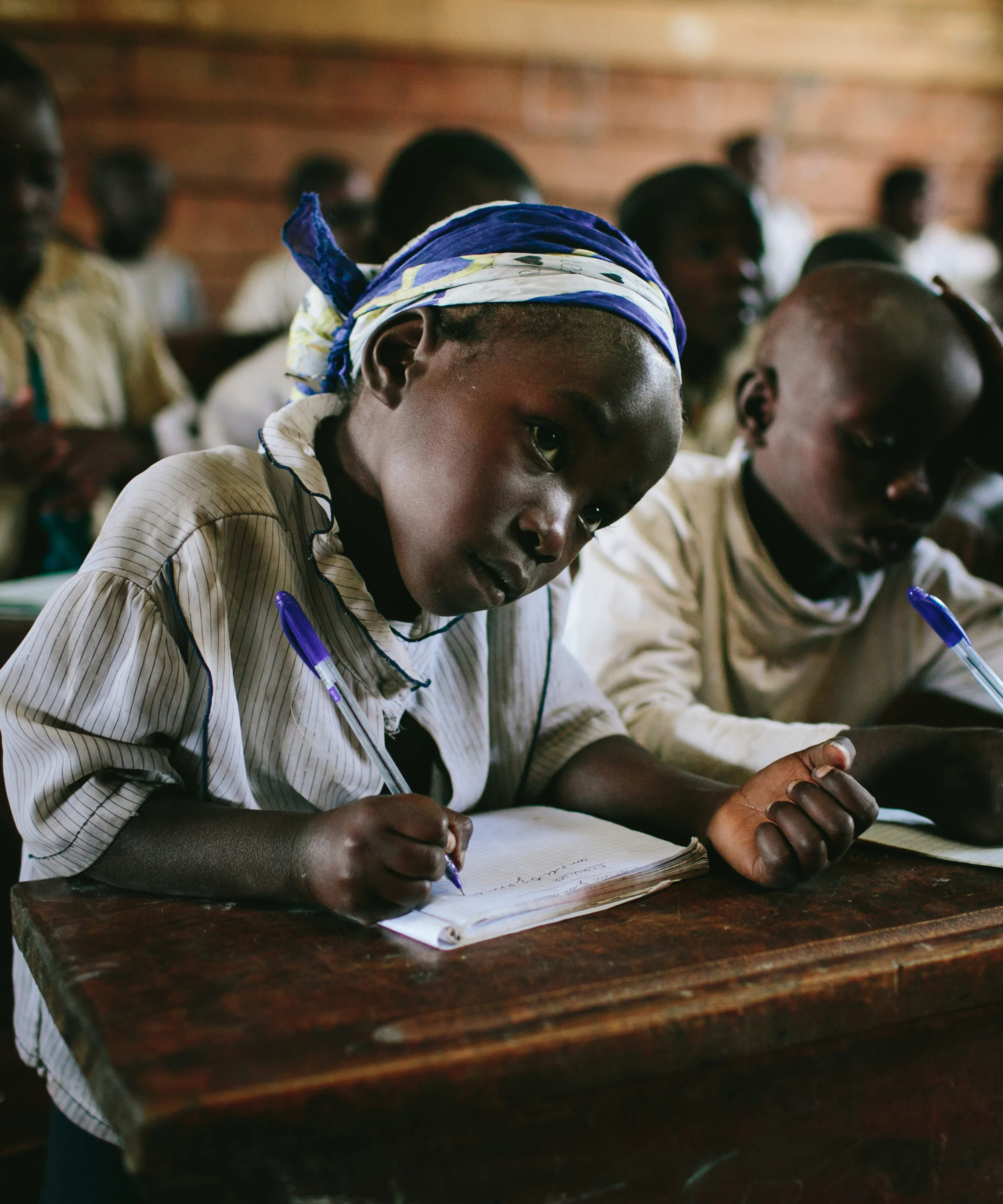
School disruption is one of the clearest long-term consequences of orphanhood. UNICEF reports that orphans and other vulnerable children are at higher risk of missing out on schooling.[1] In practice, that can mean unpaid fees, no uniform, no transport, caregiving duties at home, or simple exhaustion after a family crisis. Even when school is technically available, a child who is hungry, grieving, or moving between households may not attend consistently enough to benefit.
Education is also connected to HIV prevention and long-term wellbeing. UNICEF has emphasized that ending AIDS requires work across sectors, including addressing structural factors such as lack of education, poverty, and violence.[2] CDC likewise includes educational access and completion among the goals of OVC support.[4] For AIDS orphans, keeping a place in school is not just an academic issue. It is often one of the strongest protective factors against deeper poverty, social isolation, and future risk.
Stigma and Social Exclusion Can Follow Children Everywhere
Social stigmatization remains a serious challenge because HIV-related assumptions can affect how children are treated in extended families, schools, clinics, and communities. Some children are stigmatized because a parent died of AIDS-related causes. Others face suspicion that they are living with HIV themselves. UNICEF identifies stigma and discrimination as a critical barrier for adolescents living with HIV and other marginalized groups, and links that barrier directly to weaker access to essential services.[2]
That stigma can be subtle or explicit. A child may be mocked, avoided, left out of school activities, or treated as a burden inside the home. The effect is often cumulative: shame discourages help-seeking, silence delays treatment, and exclusion weakens a child's sense of belonging. For children already coping with bereavement, those pressures can deepen anxiety, depression, and withdrawal, all of which make school retention and health follow-up harder to sustain.[1]
Poverty and Caregiver Strain Intensify Every Other Risk
Many of the hardest challenges are economic. When a wage earner dies, food security, rent, school spending, and transport for clinic visits all become less predictable. UNICEF notes that orphans and vulnerable children are more likely to live in households with less food security.[1] In many communities, relatives still take children in, but that generosity can stretch already fragile household budgets past their limit.
Caregiver strain is not only financial. New caregivers may be supporting several children, managing their own health concerns, or trying to navigate legal and administrative issues such as birth registration, guardianship, or school placement. Without coordinated case management, children can disappear between systems that each address only part of the problem. This is why stronger responses tend to combine health care, social welfare, psychosocial support, and household follow-up instead of relying on a single intervention.[3][4]
What Better Support Needs to Look Like
A stronger response to the challenges facing AIDS orphans in Africa has to be practical. Children need access to treatment and routine health care, but they also need stable caregivers, safer schools, social protection, and protection from stigma. Programs work better when they help families solve small barriers early, before those barriers become dropout, treatment interruption, exploitation, or long-term neglect.
That is also why cross-sector work matters. UNICEF frames the HIV response around integration with primary healthcare, schools, and community platforms, while international OVC programs continue to emphasize resilience, educational access, and family support.[2][4] The challenge is not a lack of evidence about what children need. The challenge is sustaining local systems that can deliver that support consistently enough for children to feel the difference.
FAQ About the Challenges Facing AIDS Orphans in Africa
Why are healthcare needs so difficult to meet after a parent dies?
A child may lose the adult who managed clinic visits, treatment schedules, transport, and household decisions.
New caregivers often face cost, distance, and information barriers that make treatment follow-up less consistent.
Why is school attendance such a major issue for AIDS orphans?
Orphanhood often brings poverty, grief, household instability, and extra caregiving duties that interrupt attendance.
Once a child falls behind or leaves school, the risk of long-term exclusion and deeper vulnerability increases.
How does stigma affect children who have lost parents to AIDS?
Stigma can isolate children socially, reduce help-seeking, and make schools or clinics feel unsafe.
It can also reinforce silence and discrimination inside families and communities, which makes recovery and stability harder.
Why This Challenge Deserves Continued Attention
Current challenges facing AIDS orphans in Africa deserve attention because the consequences are cumulative. A child who misses treatment, misses school, loses social support, and lives under stigma is not facing four separate problems. They are facing one unstable system from several directions at once. The most effective response is to reduce that instability early and consistently so children can remain healthy, protected, and connected to a future that is bigger than immediate survival.
Endnotes
[1] UNICEF Data - AIDS-Related Orphanhood. Learn more
[3] CDC - Finding Stability: Orphans and Vulnerable Children in the DRC. Learn more
[4] CDC - Prioritizing Maternal and Child Health. Learn more
Related Reading
Continue Exploring
Research & Insights
Legal Rights and Protections for AIDS Orphans in Africa
AIDS orphans in Africa need more than care alone. They need enforceable rights to legal identity, family-based care, inheritance, and protection from abuse, with Cameroon and Kenya showing where those systems work and where gaps remain.
Case studies and success stories from Africa show how AIDS orphans can overcome grief, poverty, school disruption, and social isolation when effective interventions are practical, local, and sustained.
Sustainable solutions for orphan care in Africa depend on long-term community systems, caregiver support, education continuity, and accountable local partnerships, with special emphasis on Cameroon and Kenya.