
Programs
Nutrition and Food Security in Africa
Examining the challenges of nutrition and food security for AIDS orphans across Africa, with a close look at programs addressing these needs in Cameroon and Kenya.
Read moreFor organizations serving AIDS orphans, local partnerships are not a secondary implementation detail. They are the structure that makes support practical, ethical, and sustainable. In countries such as Cameroon and Kenya, trusted community-based organizations, schools, churches, women’s groups, and local leaders often provide the relationships that keep vulnerable children connected to care. Strong partnerships turn outside support into locally usable action.
AIDS orphans often face layered problems at the same time: school costs, grief, stigma, food insecurity, health needs, and unstable caregiving. Those problems rarely appear one by one. Local organizations are usually better positioned than remote institutions to see how those pressures combine inside one household and to respond before a child drops out of school, leaves home, or becomes invisible to support systems.
Success Story
The question is not whether an organization has local partners. The harder question is whether those partners are trusted, accountable, child-focused, and able to act consistently in the communities where AIDS orphans live.
The best partnerships are built around complementarity rather than symbolism. An international nonprofit may bring fundraising capacity, donor communications, and broad oversight, while local organizations contribute case knowledge, cultural understanding, field coordination, and relationships with caregivers. Each side should do the part it can do best.
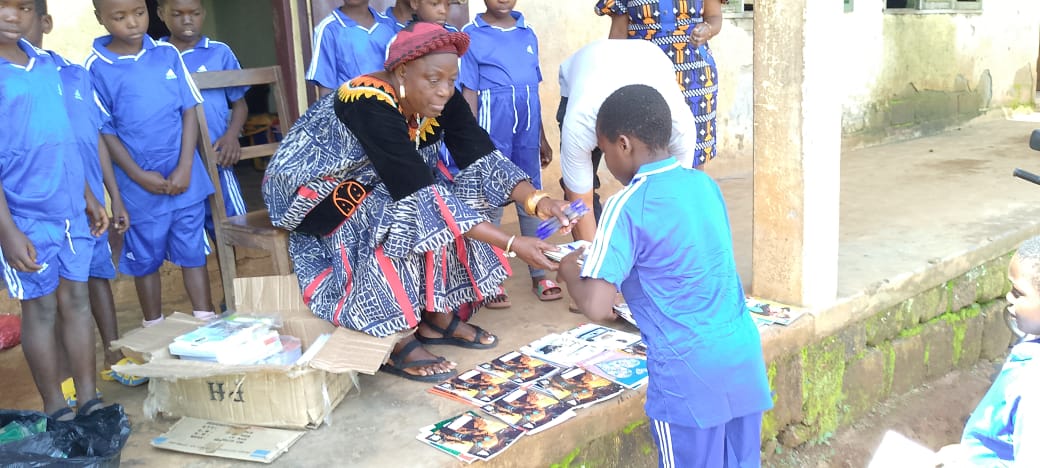
In Cameroon, especially in rural and high-fragility areas, support for AIDS orphans often depends on whether a trusted local organization can keep contact with families despite distance, poverty, and service gaps. A donor may think first about paying school fees, but the local implementation problem can be more complex: confirming which children returned to class, helping caregivers secure uniforms and supplies, and staying engaged when a household is under stress.
That makes partnerships in Cameroon especially valuable when they include community-based organizations, churches, school contacts, and local leaders who can verify need and follow through after support is delivered. The strongest Cameroon strategy is usually practical rather than abstract. It builds a local network that can find children early, respond quickly, and keep checking whether the help actually stabilized the household.
In Kenya, partnerships often work best when they connect with the community systems already helping children remain visible. Schools, churches, community health volunteers, women’s groups, and neighborhood support networks can all play a role in identifying which children are at risk after the loss of a parent. That means a good partnership model in Kenya is often network-based rather than centered on a single institution.
For AIDS orphans in Kenya, this kind of partnership can improve both speed and continuity. If a local organization works closely with schools and caregivers, support does not end when funds are disbursed. There is a better chance someone notices missed attendance, a food shortage, or a teenager beginning to disengage. In that sense, local partnership is not only about delivery. It is about staying close enough to prevent a manageable problem from becoming a lasting setback.
Donors often ask how they can tell whether partnership-based work is credible. The answer is not more branding. It is clearer accountability. Good partnerships show how children are identified, what support is being funded, who verifies delivery, and how the organization learns whether the intervention helped. For AIDS orphans, accountability should be tied to lived outcomes such as school continuity, caregiver stability, and visible follow-up.
This is where local organizations add value beyond logistics. They make it possible to check reality. A remote team may count items shipped, but a local partner can confirm whether a child received the uniform, whether the caregiver could still manage other school costs, and whether new risks have emerged since the first visit. That kind of grounded accountability is what turns charitable intent into reliable support.
Partnerships with local organizations in Africa are essential because AIDS orphan support depends on trust, proximity, and follow-through. Cameroon shows why rural field coordination and local verification matter. Kenya shows how community networks can keep children connected to school and caregivers after loss. In both places, the lesson is the same: when local organizations are chosen well and supported properly, partnerships become one of the most effective ways to protect vulnerable children.
Related Reading
Examining the challenges of nutrition and food security for AIDS orphans across Africa, with a close look at programs addressing these needs in Cameroon and Kenya.
Read moreFundraising and donation initiatives in Africa can better support AIDS orphans when donations strengthen school access, caregiver stability, health follow-up, and local accountability in Kenya and Cameroon.
Read more
Volunteer opportunities across Africa can help support AIDS orphans when they strengthen schools, caregivers, health outreach, and family-based care instead of short-term institutional placements.
Read moreTake Action
Support locally rooted partnerships that help AIDS orphans stay in school, strengthen caregivers, and receive practical follow-up in Cameroon, Kenya, and similar communities.